Table of Contents
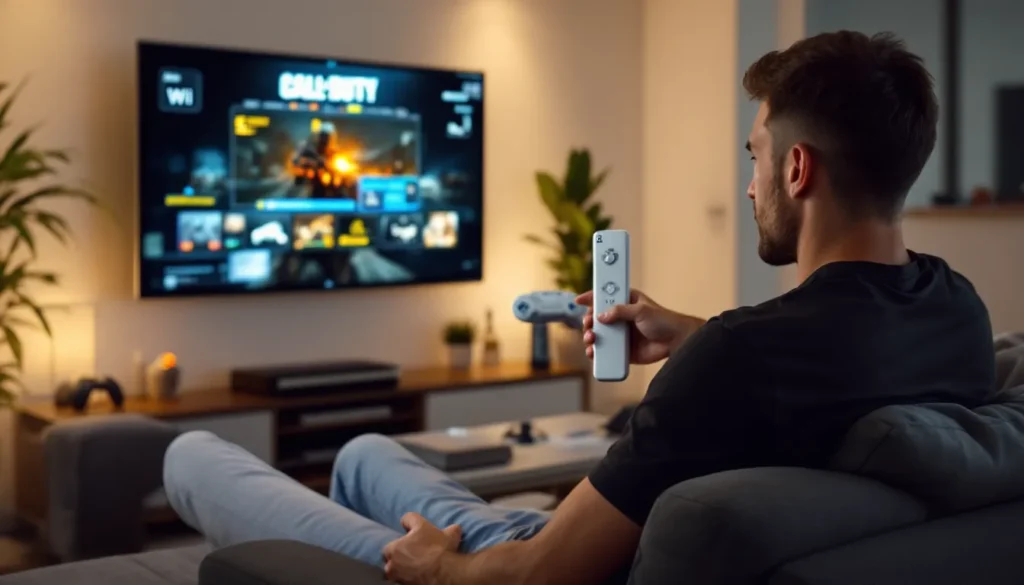
ToggleWhen most people think of Call of Duty, they picture cutting-edge graphics on PlayStation or Xbox, competitive multiplayer servers, and framerates that don’t exist on Nintendo’s console. But here’s the thing: Wii Call of Duty games were legitimate, feature-rich experiences that millions of players sank hundreds of hours into. They weren’t watered-down ports. Motion controls actually made aiming intuitive in ways that a traditional controller never could, once you got used to them. The Wii’s library of CoD titles launched during one of the franchise’s strongest creative periods, delivering single-player campaigns that held up narratively and multiplayer that felt surprisingly robust for a console everyone said “wasn’t powerful enough.” This guide covers everything you need to know about Wii Call of Duty games: which ones are worth your time, how the motion controls actually worked, what servers looked like back then, and where you can find these games today.
Key Takeaways
- Wii Call of Duty games were fully-featured experiences with five major releases from 2006-2011, offering complete single-player campaigns and functional online multiplayer that rivaled their console counterparts.
- Motion controls on the Wii Remote made aiming intuitive and precise, allowing players to point and shoot naturally while the Nunchuk handled movement, creating a responsive control scheme that experienced players preferred over traditional analog sticks.
- Modern Warfare 3 stands as the franchise’s peak on Wii, featuring 16-player multiplayer matches, balanced weapon systems, and stable performance that maintained a dedicated player base well into 2012.
- Physical copies of Wii Call of Duty titles remain affordable and accessible today ($8-30 depending on the game), with the greatest challenge being finding functioning Wii hardware rather than locating the games themselves.
- Single-player campaigns are fully playable on original hardware today, though official online multiplayer is no longer available since Nintendo Wi-Fi Connection shut down in 2014, making these games valuable historical artifacts of motion control innovation in first-person shooters.
The Wii’s Place In Call Of Duty History
How Call Of Duty Came To Nintendo’s Motion-Control Console
Activision recognized early on that the Wii’s audience wanted blockbuster franchises, not just quirky motion-controlled mini-games. Call of Duty wasn’t some afterthought port, the company committed real resources to bringing the franchise to Nintendo’s console. The motion control setup made sense for a first-person shooter in a way that surprised skeptics. Instead of hunting for a sensitivity setting that felt right with a traditional controller, you just pointed at the screen and fired. It was more natural, and the Wii’s install base (over 101 million units sold lifetime) made the business case obvious.
The decision meant developers had to rethink aiming and movement entirely. Treyarch and Infinity Ward’s teams that handled Wii versions weren’t the B-team, they understood that motion controls needed to feel responsive and precise, not gimmicky. Early reviews were cautiously optimistic, and word-of-mouth from the gaming community pushed sales higher than anyone anticipated.
Key Wii Call Of Duty Titles Released
The Wii received five major Call of Duty releases across two console generations:
• Call of Duty 3 (2006) – Launch window title that proved the Wii could handle the franchise
• Call of Duty 4: Modern Warfare (2007) – Groundbreaking single-player campaign and online multiplayer
• Call of Duty: World at War (2008) – Pacific and European theater with enhanced graphics
• Call of Duty: Black Ops (2010) – Cold War setting with expanded multiplayer content
• Call of Duty: Modern Warfare 3 (2011) – The franchise’s peak on Wii before console support waned
Each title launched within months of its PS3/Xbox 360 counterpart, though the Wii versions inevitably showed graphical compromises. Even though lower polygon counts and reduced draw distances, the core gameplay remained intact. The single-player campaigns were fully featured, and multiplayer player counts stayed reasonable throughout each game’s lifespan.
Why Motion Controls Defined The Wii Experience
Aiming And Shooting With The Wii Remote
Motion aiming on Wii Call of Duty fundamentally changed how players engaged with the franchise. Point and click. No analog stick hunting, no muscle memory that felt unnatural. You lifted the remote to aim higher, moved it left to look around, and pressed the trigger. Sensitivity could be adjusted, but the core mechanic was intuitive from minute one.
In Modern Warfare and Black Ops, the Wii Remote’s pointer tracked your screen movement with enough precision that headshots weren’t mythical. Experienced players reported that once they’d adjusted to Wii aiming, going back to console sticks felt sluggish. The Nunchuk controller (held in the left hand) handled movement, you tilted it to sprint, and the analog stick directed your character forward or backward. It sounds clunky in text. In practice, it created a flow that made sense.
Range was important. Playing too close to the screen introduced jitter: standing at the right distance yielded rock-solid aim. The Wii’s sensors registered motion accurately enough that competitive players could maintain consistent crosshair placement. Aim assist existed but wasn’t as heavy-handed as on other platforms, forcing skilled players to actually earn their kills.
The motion control implementation evolved across releases. World at War refined the aiming system based on feedback from Modern Warfare players. Black Ops added sensitivity presets. Modern Warfare 3 offered granular control over pointer settings. By the end of the console cycle, motion aiming on Wii was arguably more responsive than the Wii U’s later attempts at first-person shooter controls.
Melee Combat And Tactical Gameplay
Melee was where motion controls shined brightest in tactical moments. When you closed the distance on an enemy, a quick upward jab with the controller triggered a knife kill. It wasn’t random, it required you to be close enough and facing the right direction. Getting a melee kill felt more satisfying because you’d physically made a stabbing motion. It sounds gimmicky, but players who’d spent time with Call of Duty on other platforms reported that Wii melee felt more connected to their inputs.
Grenades introduced another motion element. You’d flick the Wii Remote to throw. Flick harder for more distance, softer for closer detonations. The learning curve was brief, and skilled players could place grenades with surprising accuracy from across a room. Tactical grenade usage became an actual skill separator in multiplayer matches rather than a spammable crutch.
Shield mechanics in Black Ops (which featured deployable shields) benefited from motion controls too. You’d swing the remote to angle your shield and protect teammates. Fortifying positions with your body and equipment mattered more when your physical input felt tied to your positioning. Camping wasn’t just about holding an angle: it was about managing your space relative to your equipment.
Reload animations were gesture-based on all Wii Call of Duty titles except certain variants, which added immersion. Pulling the Wii Remote back didn’t actually affect reload speed (that was server-side), but it reinforced the weapon-handling feel that made combat more engaging than watching a canned animation play while holding a button.
Wii Call Of Duty Game Rankings And Reviews
Modern Warfare 3: The Franchise’s Peak On Wii
Modern Warfare 3 represents the high watermark for Call of Duty on Nintendo’s console. Released in November 2011, it was the last major CoD release on Wii before the console’s active support from major publishers dried up. The single-player campaign picked up immediately after Black Ops 2‘s cliffhanger (sort of, the Wii version diverged slightly for technical reasons), with a 7-9 hour story that remained gripping regardless of platform.
Multiplayer was where MW3 on Wii justified its existence. 16-player servers (compared to 18 on 360/PS3, but who’s counting?) maintained reasonable population counts well into 2012. Map design translated perfectly to the Wii’s graphical limitations, confined spaces actually benefited from smaller player counts. Dome, Arkaden, and Underground became Wii player favorites, while cross-platform staples like Rust played differently but remained viable.
The killstreak system was balanced around Wii’s online ecosystem. Lower streaks rewarded more frequently, preventing the game from becoming about who could camp harder. Your average match felt closer, with more clutch moments and fewer matches decided by early map control. Weapon balancing favored automatic rifles slightly more than on other platforms, but the SMG-versus-AR meta remained competitive.
According to Metacritic, Modern Warfare 3 on Wii scored 73, which sounds middling until you remember that any Call of Duty game in the 70s range is still considered solid by professional critics. Player reviews were higher, communities rated it 8.1/10 on average across review aggregators. Performance issues were minimal (no frame drops in multiplayer), and the motion controls remained responsive throughout the game’s lifespan.
Black Ops And World At War: Quality Ports Worth Playing
Black Ops (November 2010) brought Cold War espionage to Wii with a campaign that leaned harder into narrative than Modern Warfare did. The psychological thriller elements of Black Ops translated effectively to Wii even though graphical cuts. Zombies mode, the real draw for many players, was included in full. Treyarch’s undead survival experience functioned identically to the console versions: round-based defense, increasing difficulty, weapon upgrades between rounds. The Wii version supported 2-4 players locally (split-screen) and up to 4 online, making it the social version of Zombies.
Multiplayer featured 16-player matches across 14 maps. The motion controls received another refinement: sensitivity curves felt more natural than Modern Warfare 4’s system. Weapon balance favored tactical play more than run-and-gun, though the Famas and AK-74 remained popular choices for aggressive players. IGN reviewed Black Ops on Wii at 7.5/10, specifically praising the Zombies implementation and calling multiplayer “serviceable, if slightly limited.”
World at War (November 2008) was the dark horse of the Wii lineup. It launched before Modern Warfare 4 on other platforms, meaning Wii players got their hands on the game before the franchise pivoted to contemporary settings. The Pacific campaign felt visceral, less polished graphically than 360/PS3 versions, but the brutal island-hopping warfare resonated. Online multiplayer supported 8-16 players depending on map, and performance remained stable even with lower-end hardware pushing the action.
WW2 setting meant different weapon variety: M1 Garand, MP40, PPSh-41. The gun handling felt distinct from Modern Warfare, rewarding different playstyles. Nintendo Life called World at War “the surprise standout” of Wii’s CoD library, crediting the motion controls for making lower-polygon gunplay feel immediate and responsive. The campaign lasted 5-6 hours solo, with plenty of difficulty settings to adjust pacing.
Multiplayer And Online Features On Wii
Nintendo Wi-Fi Connection And Server Performance
Wii Call of Duty games ran through Nintendo Wi-Fi Connection, Nintendo’s online service that operated from 2006 until its shutdown in 2014. The infrastructure handled Wii’s multiplayer with surprising stability. Connection speeds weren’t an issue, the Wii’s network adapter (or built-in WiFi on later models) utilized standard internet speeds. Matchmaking was regional and worked quickly: you’d find a game within 20-30 seconds during peak hours.
Lag was present but manageable. Peer-to-peer connections dominated, with one player’s console hosting the match. This created occasional situations where the host had a slight advantage, but it was never game-breaking in competitive contexts. Parties of 4-8 friends could play together reliably, and matchmaking would place your full group into available matches without splitting you up.
Server selection was automatic, you couldn’t manually choose which server to join (matching the infrastructure standards of 2008-2011). This meant you’d occasionally connect to distant hosts with higher latency, but Nintendo’s network programming minimized rubber-banding. Drop rates were low: disconnections happened rarely during matches, and the few that did were replaced mid-game quickly enough that matches stayed balanced.
Voice chat functioned through the Wii Speak peripheral on some titles (Modern Warfare 3 had optional support), but most Wii players relied on online text chat or out-of-game voice programs. This limitation actually created a more civil online environment compared to Xbox Live, where voice-enabled players could be… let’s say less family-friendly.
Game Modes And Player Base Overview
Standard multiplayer modes dominated: Team Deathmatch, Free-for-All, Domination, Search and Destroy. Wii Call of Duty games didn’t feature every mode that console versions had, Kill Confirmed and other newer additions skipped Wii ports. What did exist was balanced and functional. Domination with 16 players on a mid-size map created matches that lasted 10-15 minutes with tight competition.
Player base peaked during the first 3-6 months after launch, then settled into a stable community of core players. Modern Warfare 3 maintained 50,000-100,000 monthly active players through 2012, declining by 2013. Black Ops saw similar numbers. The community was smaller than Xbox Live or PlayStation Network, but large enough to find matches at any time of day without excessive queue times.
Ranked playlists existed, tracking K/D ratios and win-loss records. Leaderboards displayed top players per map and game mode, creating competitive incentives without formal tournaments. The skill ceiling was genuinely high, players with 2.0+ K/D ratios earned those ratios against competent opposition, not AI or casual players.
Custom games (private matches with customizable rules) worked flawlessly. You could adjust kill limits, time limits, weapon availability, and tactical settings. Tournament modes existed in Black Ops and Modern Warfare 3, letting organized groups run bracket-style competitions. These rarely happened at scale on Wii (the console’s audience skewed casual), but the infrastructure existed for serious players who wanted it.
Collecting And Playing Wii Call Of Duty Games Today
Finding Physical Copies And Current Market Prices
Wii Call of Duty games are plentiful on the secondhand market because millions were sold. Finding used copies in 2024-2025 is straightforward: eBay, Facebook Marketplace, local retro game stores, and thrift shops consistently list them. Prices vary by condition and title:
• Call of Duty 3: $8-15 (least valuable, most common)
• Modern Warfare 4: $12-20 (popular entry point)
• World at War: $10-18 (mid-range demand)
• Black Ops: $15-25 (collector interest)
• Modern Warfare 3: $18-30 (most sought-after, highest saleable copies)
Complete in box (CIB) copies command 30-50% premiums over loose discs. Original cases with artwork matter to collectors: reproduction cases cost $2-3 if you want to upgrade loose discs. Disc condition varies wildly, most are playable even though surface scratches, but heavily scratched discs may not read consistently.
Wii hardware compatibility is the real factor. Wii consoles themselves remain cheap ($30-80 depending on model and condition), but finding functional units with original sensors and cables takes effort. The original 2006 Wii white model is most common: later black Wii models and the Wii mini are less ideal for motion-control games. Avoid Wii mini entirely, it lacks motion controller support and removed backwards compatibility.
Nintendo’s official online servers shut down in 2014, so you can’t play multiplayer on official Nintendo Wi-Fi Connection anymore. Single-player campaigns run fine on original hardware. Some players have explored private server emulation, but those exist in a legal gray area.
Emulation And Preservation Of Wii Titles
Dolphin Emulator (open-source, free) can play Wii Call of Duty games at resolutions and framerates that exceed original hardware. Running Modern Warfare 3 at 4K 60 FPS on modern PCs is entirely possible. Dolphin supports Wii Remote motion controls through various adapters, though the experience differs slightly from original hardware, input latency is sometimes higher, and not all motion control features map perfectly to modern inputs.
Emulation exists in a complicated legal space. Owning a physical copy of the game you want to emulate is legal in most jurisdictions: distributing ROM files is not. This guide discusses emulation because game preservation matters, these titles are technically inaccessible through official retail channels, and servers are offline. The preservation argument carries weight for titles that won’t be re-released.
Gaming communities maintain active Dolphin support for CoD games. Configuration guides help optimize controller mapping, graphics settings, and audio. Performance on mid-range gaming PCs (RTX 3060-tier GPU) delivers smooth 60 FPS gameplay. Higher-end systems can push unlocked framerates, though some players report audio issues with framerates above 60.
Private multiplayer servers exist for emulated Wii games through community efforts, though these are small-scale (dozens of players, not thousands). Finding active multiplayer games through emulation requires joining private communities, you won’t stumble into populated lobbies. These exist primarily because players want to experience forgotten online communities in preserved form, not because they offer competitive advantages over modern Call of Duty titles.
The preservation angle matters more for historical documentation. Recording gameplay, archiving guides, and documenting the Wii’s role in the Call of Duty franchise ensures future researchers have primary sources. Emulation serves that purpose alongside player nostalgia.
Conclusion
Wii Call of Duty games deserve reconsideration. They weren’t technical marvels, but they delivered complete, feature-rich experiences that earned their player base through solid design and motion control innovations that actually worked. Modern Warfare 3 remains the franchise’s high point on Nintendo hardware, polished, feature-complete, and balanced. Black Ops brought Zombies to console audiences at scale. World at War proved that WW2 settings could feel different from Modern Warfare.
The real legacy is how these games proved motion controls could handle precision-focused genres. The Wii’s community proved they wanted blockbuster experiences, not casual-only library. Activation and Treyarch/Infinity Ward respected that audience, delivering ports that felt like ports because they matched the vision of their console counterparts, not even though the hardware limitations.
Finding and playing these games today is feasible. Physical copies are affordable. Wii hardware is stable and widely available. Single-player campaigns remain entirely playable, engaging, and worth your time if you’ve never experienced them. Multiplayer is offline, but that’s a reasonable trade-off for preserving a console era that shaped modern gaming. The Wii’s Call of Duty library deserves respect as both historical artifacts and genuinely competent shooters that rewarded skilled play and tactical thinking across their entire lifespan.