Table of Contents
ToggleCall of Duty: WWII brought a grounded, character-driven narrative to the franchise that resonated with players who wanted more than just gunplay. The campaign centered on a squad of soldiers rather than lone-wolf protagonists, and that shift made every death, every sacrifice, and every character arc hit harder. Whether you’re revisiting the 2017 title or discovering it for the first time, understanding the characters, their motivations, relationships, and arcs, deepens the entire experience. This guide breaks down the roster of Call of Duty WWII characters, from the protagonist Jack Mitchell to the supporting squad and the enemies they face, showing you who drives the story and why they matter to the campaign.
Key Takeaways
- Call of Duty WWII characters drive the campaign through squad-based storytelling that emphasizes emotional weight and personal sacrifice over lone-wolf heroics.
- Jack Mitchell’s arc from uncertain soldier to respected leader demonstrates authentic character growth shaped by loss and hard decisions throughout the campaign.
- Squad dynamics and individual character personalities directly impact both gameplay mechanics and narrative pacing, making losses carry tactical and emotional significance.
- Call of Duty WWII distinguishes itself by treating both Allied soldiers and German antagonists as realistic combatants with motivations and moral complexity rather than faceless archetypes.
- Character-focused design choices, from squad AI cooperation to historical authenticity in cosmetics, elevate the campaign beyond typical military shooter storytelling by prioritizing genuine relationships over spectacle.
Overview Of The Campaign And Character Roster
Call of Duty: WWII launched in November 2017 and immediately differentiated itself from recent entries by ditching advanced movement and returning to boots-on-the-ground combat. But the real strength of the game wasn’t just the mechanics, it was the characters. Infinity Ward crafted a squad-based narrative set during the European theater of World War II, focusing on ordinary soldiers dealing with extraordinary circumstances.
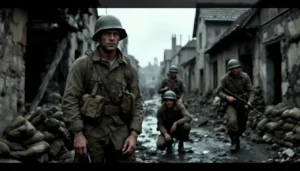
The campaign follows the 1st Infantry Division as they progress from North Africa through Sicily, Italy, and into Germany. Unlike previous Call of Duty games that often featured elite special forces or shadowy operatives, WWII grounded the story in the perspective of regular infantry soldiers. The roster includes squad leaders, fellow soldiers, and historically-inspired antagonists who all contribute to a cohesive narrative arc.
What made Call of Duty WWII’s character approach unique was the emphasis on squad dynamics. Players didn’t just control one character in isolation: they were part of a unit where relationships developed, bonds formed, and stakes felt genuine. Every squad member had a name, a personality, and moments that revealed their fears and motivations. This meant losses hit differently, when a character died, it wasn’t just a cutscene: it was the removal of a familiar presence from future missions.
Jack Mitchell — The Soldier’s Journey From Loss To Leadership
Jack Mitchell is the player character and heart of Call of Duty: WWII’s campaign. He’s voiced by Sam Witwer and modeled after a composite of real soldiers, representing the everyman caught in WWII. What makes Jack compelling isn’t superhero bravado, it’s his vulnerability and growth through trauma.
Background And Early Rank
Jack starts the campaign as a relatively new soldier attached to the 1st Infantry Division. He’s not a grizzled veteran: he’s still adapting to combat, making him relatable to players. His early characterization is that of someone competent but uncertain, capable of following orders but not yet confident in his own judgment. This positioning creates narrative space for growth. Players see Jack transition from rookie to someone who earns the respect of his squad through consistent action and decision-making.
The opening sections of the campaign establish Jack’s baseline: he can fight, he can survive, but he hasn’t yet proven himself a leader. Early missions in North Africa and Sicily show him learning the ropes, building rapport with his squad, and beginning to understand the weight of war beyond basic training.
Arc And Character Development
Jack’s arc throughout the campaign is driven by loss and responsibility. Early in the campaign, he experiences a personal tragedy that shapes his motivation for the remainder of the game. Without spoiling the specific moment, this loss becomes the emotional core of his character, it’s what keeps him pushing forward and what eventually drives him to take on greater responsibility within the squad.
As the campaign progresses, Jack earns Sergeant rank not through seniority alone but through demonstrated capability and leadership. Other soldiers follow him because he’s proven himself in the field. By the campaign’s final missions, Jack has transformed from an uncertain soldier into someone making strategic decisions and protecting his remaining squad members. The game doesn’t shy away from showing the psychological toll of combat, Jack carries the weight of every decision and every loss.
What elevates Jack Mitchell above typical military protagonist archetypes is that he’s allowed to struggle. He makes mistakes, second-guesses himself, and shows genuine emotion during cutscenes. Players experience his journey not as a predetermined hero’s rise but as a soldier earning his place through repeated exposure to combat and loss. That authenticity is why his character resonates beyond a single playthrough.
Sergeant Pierson — The Voice Of Experience
Sergeant Pierson is the squad’s anchor, the experienced voice who grounds the narrative and provides Jack with both mentorship and conflict. Pierson has seen combat before and carries that experience as both strength and burden. He’s protective of his men but also pragmatic about the realities of war.
Pierson serves as a father figure early in the campaign. He takes Jack under his wing and helps him understand the unwritten rules of military life. But Pierson is more than a mentor, he’s a fully realized character with his own struggles, doubts, and moral code. The sergeant doesn’t approve of unnecessary killing or mistreatment of prisoners: he operates from a sense of honor even in brutal circumstances.
Role In The Squad And Command Style
As the squad leader, Pierson is responsible not just for tactical decisions but for the morale and survival of his men. His command style is direct but fair. He doesn’t waste words on sentiment, but he also doesn’t view his soldiers as expendable. This tension between military duty and personal care for his squad manifests throughout the campaign. Pierson makes hard calls, sometimes ordering his men to press forward into danger because the mission demands it, but he bears the weight of those decisions.
Pierson’s role extends beyond barking orders. He’s present in downtime moments, offering advice to Jack about dealing with loss and the weight of command. These quieter scenes establish Pierson as someone who understands that soldiers are people first, soldiers second. His experience means he knows how to keep his squad functional even when morale is fragile.
Relationship With Other Characters
Pierson’s dynamic with Jack Mitchell is the heart of their relationship. He sees potential in Jack but also tests him repeatedly to ensure he’s capable of stepping into a leadership role. When Jack falters, Pierson is there to steady him. When Jack proves himself, Pierson acknowledges it with respect, not praise, but recognition.
With other squad members, Pierson maintains professional distance while still showing he cares about their welfare. He knows when soldiers are struggling and checks on them. He also enforces military discipline when necessary, though he does so without unnecessary harshness. The broader squad respects Pierson not because he’s intimidating but because he’s consistently demonstrated competence and fairness.
The arc of Pierson’s character involves his own journey toward accepting that younger soldiers like Jack are capable of stepping into leadership. It’s not an easy transition for someone of Pierson’s generation, but watching him recognize Jack’s growth forms one of the campaign’s emotional threads. Their relationship evolves from pure mentor-student into something more mutual, two soldiers learning from each other as circumstances evolve.
Supporting Cast And Squad Members
While Jack and Pierson drive the main narrative, Call of Duty: WWII’s campaign is elevated by a roster of supporting characters who each contribute personality and context to the squad’s journey.
Joseph Turner And His Contributions
Joseph Turner is the squad’s communications specialist and demolitions expert. Turner brings technical competence and battlefield knowledge to the team. What makes Turner interesting is his perspective as someone who understands the broader strategic picture, he knows why missions matter because he’s briefed on the larger campaign objectives.
Turner’s character arc involves grappling with the moral weight of following orders, particularly when missions involve civilian areas or morally ambiguous objectives. His expertise makes him valuable, but he’s not simply a tool, the game treats him as someone with agency and conscience. Turner has moments where he questions orders and expresses doubts about the righteousness of certain tactical decisions. These moments add moral complexity to the campaign and prevent it from becoming a simple “us versus them” narrative.
Turner’s presence in the squad also provides technical exposition without feeling forced. When the team needs to understand a weapon system, approach an objective, or navigate a compromised position, Turner’s knowledge provides the explanation naturally.
Aiello, Zussman, And The Rest Of The Team
Private Aiello serves as the squad’s heavy weapons specialist, bringing a machine gun’s firepower to engagements. Aiello is characterized as enthusiastic and eager to prove himself. He’s younger than some squad members and carries that youthful energy, not recklessness, but optimism in the face of danger. Aiello’s arc involves growing from a replaceable soldier into someone the squad depends on.
Private Zussman is the squad’s medic and provides both tactical support and emotional grounding. Zussman has perhaps more emotional depth than his designation might suggest. He’s present during down moments, offering perspective and humanity to situations that might otherwise be purely tactical. The medic role gives Zussman access to squad members’ vulnerabilities, soldiers often open up to their medics in ways they wouldn’t with other squad members.
These supporting characters might have less screen time than Mitchell or Pierson, but they’re not afterthoughts. Each squad member has moments that develop their personality. The game includes radio conversations, brief cutscenes, and battlefield moments where these soldiers reveal their motivations. Some joined the military out of patriotism, others out of necessity, and others for reasons entirely personal. This variety makes the squad feel like a genuine cross-section of American soldiers rather than a collection of archetypes.
The supporting cast also serves a narrative function: they’re stakes. When players care about Aiello, Zussman, and Turner as individuals, losses within the squad hit harder. The campaign becomes more than a military shooter, it becomes a story about people trying to survive together.
Antagonists And Enemy Characters
Call of Duty: WWII distinguishes itself by treating German soldiers not as faceless enemies but as actual combatants with order and structure. But, the campaign also features specific antagonists who represent the regime and ideology that drove the war.
Nazi Officers And Historical Figures
The campaign includes several named German officers who serve as progression points through the game’s story. These antagonists aren’t cartoonishly evil, they’re portrayed as competent military officers executing orders within the Nazi hierarchy. This approach is more unsettling in some ways than caricature would be: it emphasizes that the Holocaust and Nazi atrocities were carried out not by monsters but by ordinary people following extraordinary ideology.
One notable antagonist is General Amsel, a Wehrmacht officer who becomes Jack’s personal nemesis throughout the campaign. Amsel represents the institutional machinery of the Third Reich, he’s not a mustache-twirling villain but a military professional committed to Nazi ideology. The conflict between Jack and Amsel is more than tactical: it becomes personal as the campaign escalates. Other German officers appear in specific missions, each adding flavor to the campaign’s progression through different theaters.
The game also references historical figures and incorporates real WWII context. While the main antagonists are fictional, they exist within a historically-grounded narrative that acknowledges real war crimes and the genuine stakes of WWII. This historical grounding prevents the campaign from feeling like a simple power fantasy.
The Threat They Pose To The Campaign
The German antagonists represent both tactical challenges and ideological opposition. Tactically, they’re competent enough to pose genuine threat, when soldiers encounter German forces, they’re facing trained military personnel with experience. The campaign doesn’t portray the enemy as incompetent: victory requires tactical thinking and squad coordination.
Ideologically, the antagonists represent the stakes of the war itself. This isn’t just soldiers fighting soldiers, it’s a war against a regime committing genocide. Call of Duty: WWII doesn’t shy away from this context. References to the Holocaust and Nazi atrocities appear throughout the campaign, grounding the combat in historical reality. This context makes defeating the German antagonists feel significant rather than simply mechanical.
The threat these characters pose extends beyond individual combat encounters. They represent the systematic threat that drove the Allied war effort. When players encounter high-ranking German officers, the game contextualizes these moments, these are the people directing strategy, making decisions about occupied territories, and perpetuating the regime. Defeating them means dismantling parts of that infrastructure.
Character Arcs And Emotional Moments
What distinguishes Call of Duty: WWII’s character writing is its willingness to include genuinely emotional moments alongside combat. The campaign balances action with character development, creating beats that resonate emotionally rather than just tactically.
Memorable Deaths And Sacrifices
Without spoiling specific moments, the campaign includes several character deaths that carry real weight. These aren’t quick, clean deaths, they’re moments where soldiers are removed from the squad permanently, and the remaining characters must continue without them. The game doesn’t minimize these losses or move past them quickly. Subsequent missions feature dialogue acknowledging the absence and its impact on the squad’s morale.
What makes these deaths impactful is the groundwork established earlier in the campaign. By the time a character dies, players have spent enough time with them to feel the loss. They know that character’s personality, their quirks, their role in the squad dynamic. The game also structures missions so that losing a squad member actually changes gameplay, when a demolitions expert dies, the squad loses that tactical capability, forcing tactical adjustments.
Sacrifices play a thematic role throughout the campaign. Some soldiers knowingly put themselves in danger to protect others or complete critical objectives. These moments aren’t glorified, the game treats them with respect and gravity. The sacrificing soldier understands the cost, and their squad understands what they’re giving up. This creates moral weight that typical military shooters avoid.
Character Growth Through Difficult Choices
Throughout the campaign, players face moments where Jack must make decisions that don’t have clean right answers. These aren’t morality quicktime events, they’re narrative beats where the player’s choices shape character relationships and the story’s direction. Does Jack prioritize completing the mission objective or attempting to save a civilian or fellow soldier? These choices force players to grapple with the reality of war: you often can’t do everything, and choices have consequences.
Character growth emerges from these difficult moments. When Jack makes a decision, squad members react based on their values and how it aligns with their own beliefs. Some squad members might approve of a tactical choice others would condemn. This creates natural conflict within the squad, soldiers aren’t unanimous in their support, and that division feels realistic. Over the campaign, Jack learns from both successes and failures, and crew members develop deeper relationships based on how Jack has handled previous encounters.
These difficult choices don’t reset between missions. The game remembers your decisions and references them in subsequent dialogue. If Jack chose to prioritize a mission objective over a fellow soldier’s safety in an earlier mission, that decision might haunt him, or earn him pragmatic respect from soldiers who value mission accomplishment above sentiment. The campaign treats player choices as mattering to character relationships and narrative progression.
Multiplayer And Operator Characters
While Call of Duty: WWII’s campaign focuses on the 1st Infantry Division, the multiplayer mode features faction-based characters representing different nations and military branches.
Faction-Based Characters And Skins
Multiplayer in Call of Duty: WWII divides players between Allied and Axis forces, with characters representing different nations. Allied characters come from American, British, and Soviet militaries, while Axis characters represent German and Italian forces. Each faction includes multiple character skins representing different military specializations, infantrymen, officers, sappers, and others.
These multiplayer characters aren’t developed through narrative the way campaign characters are, but they do have design identity. Each character model reflects their military branch and nation, creating visual variety that prevents the mode from feeling like twelve clones running around. The character designs incorporate historically-inspired uniforms and equipment, maintaining the boots-on-the-ground aesthetic even in multiplayer’s more arcade-leaning gameplay.
What’s notable is that multiplayer characters aren’t heavily customizable in the traditional Call of Duty sense. You can’t dramatically alter their appearance or make them unrecognizable. This design choice maintains visual clarity in multiplayer, you can quickly identify enemy players without squinting at subtle cosmetic differences. Each faction’s characters maintain a cohesive visual identity while still offering enough variety that multiple matches don’t feel visually repetitive.
Seasonal Character Additions
Post-launch content for Call of Duty: WWII introduced additional operator characters and cosmetics, though the base roster remained relatively modest compared to modern Call of Duty titles. Seasonal updates added new uniforms, historical-inspired cosmetics, and event-specific characters. These additions maintained the WWII aesthetic rather than introducing fantastical or anachronistic designs.
The seasonal approach to character releases was more conservative than later Call of Duty games. Rather than creating entirely new operators with fictional backstories, post-launch content focused on authentic WWII uniforms and historical military dress. Winter operations introduced arctic camouflage and cold-weather gear, while other seasons featured specialized uniforms from different theaters and time periods.
With historical content on gaming culture and seasonal cosmetics widely discussed in gaming media, Call of Duty: WWII’s approach to seasonal characters prioritized authenticity over novelty. This decision aligned with the game’s overall tone, it was attempting historical grounding even in its cosmetic choices. This meant fewer fantastical skins compared to other games, but also meant that visual customization never broke the WWII immersion.
How Character Design Impacts Gameplay And Storytelling
The characters of Call of Duty: WWII aren’t simply narrative window dressing, they directly impact both campaign gameplay and the overall storytelling approach. Understanding how character design influences the game reveals why this particular entry resonated with many players even though launching into a crowded shooter market.
From a gameplay perspective, squad-based character design meant that missions required coordination with AI soldiers who functioned as more than just cannon fodder. Your squad members in campaign missions aren’t weak, they’re capable combatants who can flank enemies, suppress fire, and accomplish objectives while you focus on other tasks. This design forced players to think tactically about squad positioning rather than running solo through levels. Losing a squad member meant losing a tactical asset, which is why deaths carried both narrative and gameplay weight.
Character personalities also shaped mission briefings and objectives. Rather than receiving faceless military orders, Jack learned about mission goals through conversations with squad members who cared personally about success. Pierson might explain that a particular objective matters because intelligence suggests German forces are massing for a counteroffensive. Turner might detail why a specific bridge needs to be demolished. This made objectives feel motivated by character relationships rather than just pointing players toward waypoints.
The design choice to focus on a squad rather than a lone wolf protagonist also affected storytelling pacing. Instead of a single character carrying every narrative beat, the game distributed character moments across the entire roster. This meant slower-paced campaign sequences where squad members talked, bonded, and revealed motivation. These slower moments would feel like pacing problems in a game designed around constant action, but they’re essential to making the squad feel like a cohesive unit rather than a collection of named NPCs.
Character design also influenced competitive balance and player engagement in multiplayer, where faction identity mattered for both narrative context and visual clarity. Making multiplayer characters recognizable and distinct prevented the “everyone looks the same” problem that plagued some competitor shooters. Players could quickly identify what they were looking at visually without relying entirely on name plates.
Historically-inspired character design meant that cosmetic additions through post-launch content remained grounded. Developers couldn’t simply create fantasy skins because the game had committed to historical authenticity. This constraint might seem limiting, but it actually freed designers to focus on authentic historical detail that made cosmetics feel valuable to history-minded players. A rare 82nd Airborne uniform cosmetic meant something because it was real, not because it had glowing effects or fantastical elements.
Final point worth considering: by making characters genuine subjects of narrative development, Call of Duty: WWII created natural progression through its campaign. Players weren’t just grinding through missions for mechanical progression, they were invested in seeing what happened to their squad. This character-first approach to narrative design proved refreshing in a franchise known for explosive setpieces and spectacle. It showed that military shooters could deliver emotional resonance through character work rather than relying solely on destruction and chaos for impact.
Conclusion
The characters of Call of Duty: WWII represent a deliberate design philosophy, creating a grounded, squad-focused narrative that treats soldiers as people rather than power fantasies or narrative abstractions. Jack Mitchell’s journey from uncertain soldier to squad leader, Sergeant Pierson’s evolution as a mentor learning to trust younger soldiers, and the supporting cast’s individual arcs combine to create a campaign that resonates beyond typical military shooter storytelling.
What made the character approach work was the willingness to include difficult moments, moral ambiguity, and genuine losses. The game didn’t shy away from showing the psychological weight of combat or the consequences of tactical decisions. Deaths mattered because the campaign spent time developing relationships and personality before removing characters.
For players returning to Call of Duty: WWII in 2026, revisiting these characters offers something that many modern gaming narratives struggle to deliver, a focused, emotionally coherent story built through character development rather than spectacle. Whether you’re replaying the campaign or experiencing it for the first time on PC, PlayStation, or Xbox, understanding these characters deepens the entire experience. The strength of Call of Duty: WWII lies not in innovations to the shooter formula, but in proving that character-driven storytelling could elevate a franchise built on mechanics and scale. For enthusiasts seeking gaming stories that genuinely land, the 1st Infantry Division’s journey offers exactly that.