Table of Contents
ToggleCall of Duty: Finest Hour holds a special place in gaming history as one of the first entries to bring the franchise to consoles with genuine polish and scale. Released in 2004 for PlayStation 2 and Xbox, this title redefined what console shooters could achieve and helped establish Call of Duty as a household name. For gamers returning to classic titles or newcomers curious about where the franchise’s console dominance began, Finest Hour remains a compelling experience that blends historical authenticity with engaging gameplay. Whether you’re exploring the single-player campaign or diving into multiplayer matches, understanding what made this game tick, and how it compares to modern standards, gives you the context to appreciate its lasting impact on gaming.
Key Takeaways
- Call of Duty: Finest Hour was the first console-exclusive entry in the franchise (2004), designed specifically for PlayStation 2 and Xbox, proving that fast-paced competitive FPS gameplay could thrive on pad-based controls and running at 60 fps without compromises.
- The game’s campaign follows three factions—American, British, and Soviet—across 24 missions with parallel narratives that provided respectful historical authenticity while remaining accessible to casual players unfamiliar with World War II specifics.
- Finest Hour’s multiplayer framework established the console Call of Duty formula: tight controls, responsive gunplay, map control-focused design, and objective-based modes (Search & Destroy, Team Deathmatch, Bomb, Headquarters) that influenced console shooters for two decades.
- The commercial success of 2 million copies sold signaled franchise potential that led to continued console support, directly enabling the cultural explosion of Call of Duty 4: Modern Warfare and the modern esports ecosystem.
- With servers shut down in 2013, the game is no longer officially playable online but remains accessible through original hardware, emulation communities, and preserved campaign experiences that maintain its historical significance.
- Modern Call of Duty titles continue iterating on Finest Hour’s design philosophy—map design, audio cues, objective structures, and the fundamental feel of responsive console shooter gameplay—proving its lasting influence on the entire genre.
What Is Call of Duty: Finest Hour?
Call of Duty: Finest Hour is a first-person shooter developed by Infinity Ward and published by Activision, launching on PlayStation 2 and Xbox in November 2004. It was the first console-exclusive entry in the Call of Duty series, built specifically for console hardware rather than ported from the PC original. The game follows American, British, and Soviet forces across key World War II theaters, delivering a tightly paced campaign and robust multiplayer infrastructure that felt revolutionary for console shooters at the time.
The game’s technical achievement was significant for its era. Running at 60 frames per second with no splitscreen dips, Finest Hour proved that consoles could handle fast-paced competitive FPS gameplay. The draw distance, level design, and AI pathfinding were all optimized for pad-based controls rather than mouse aiming, a design philosophy that influenced how console shooters evolved for the next two decades. With online multiplayer supporting up to 16 players and multiple game modes, Finest Hour wasn’t just a campaign experience, it was a complete package.
Today, the game exists in a curious position: it’s no longer officially supported, servers are offline, and it’s considered retro even by PlayStation 2 standards. Yet its influence is undeniable. The framework Finest Hour established for console shooters directly led to the massive success of Call of Duty 4: Modern Warfare on Xbox 360 and PlayStation 3, which would transform the franchise into the multiplayer juggernaut we know today. Understanding Finest Hour means understanding the roots of modern Call of Duty design, tight controls, snappy TTK (time-to-kill), and maps built for fast-paced engagements rather than large-scale warfare simulation.
Campaign Overview and Storyline
Single-Player Mission Structure
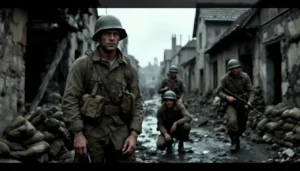
Finest Hour’s campaign consists of 24 missions split across three distinct campaigns: American, British, and Soviet. The structure allows players to experience the war from multiple perspectives, though the interconnected narrative isn’t always obvious during gameplay. Each campaign averages 8 missions, taking roughly 4–5 hours to complete per faction. Missions are mission-focused rather than open-ended: you’re funneled through objective markers with minimal environmental exploration.
Mission design emphasizes clear objectives: hold a position, destroy targets, rescue allies, or reach an extraction point. You’re supported by AI squadmates who provide suppressive fire and occasionally perform critical actions (breaching doors, providing cover). The AI is competent but straightforward, they won’t flank intelligently or adapt to your tactics, but they won’t get stuck on scenery either. Checkpoints are frequent enough to prevent frustrating replays, and difficulty scaling across Normal, Hardened, and Veteran modes affects enemy accuracy and health pool rather than spawning patterns or map design changes.
Weapon variety is standard for the era: M1 Garand, Thompson submachine gun, Mosin-Nagant, MP40, and the occasional sniper or shotgun. You can carry two primary weapons plus grenades and equipment. Ammo scarcity is limited, you’ll rarely find yourself completely dry unless you’re wasting rounds. The absence of modern mechanics like ADS (aim down sights) zoom or headshot multipliers means gunplay rewards sustained bursts and positioning over twitch reflexes.
Historical Setting and Campaign Arc
The American campaign follows Private James Barnes through North Africa, Sicily, and the Italian mainland. You fight in Kasserine Pass, participate in the invasion of Sicily, and push toward Naples. The narrative frames these events through the lens of a soldier gaining experience, with voice-acted cutscenes establishing the human cost of command decisions. Barnes’ captain makes questionable choices: the campaign doesn’t shy away from suggesting that military leadership sometimes fails enlisted men.
The British campaign stars Captain James Whiteley, beginning in North Africa against Rommel’s forces and continuing through the Mediterranean. You fight at Gyzela, defend against Afrika Korps counterattacks, and eventually reach the Sicilian beaches alongside American forces. The tone here is more procedural, Whiteley executes orders with professional detachment, contrasting Barnes’ idealistic frustration.
The Soviet campaign, featuring Lieutenant Alexei Voronin, is the most brutal thematically. You begin in the snows near Stalingrad, fighting house-to-house, and progress through the Eastern Front’s horrific casualties. Voronin witnesses the price of Soviet strategy: unlimited manpower and unsparingly expendable soldiers. The grimness of Eastern Front warfare is palpable, even within the game’s technical limitations.
These campaigns aren’t interconnected by explicit plot threads, they don’t unfold simultaneously or result in shared outcomes. Instead, they’re parallel stories unified by the global nature of World War II. This approach allows Finest Hour to cover multiple theaters without stretching narrative credibility, though it does mean no character carries emotional weight beyond their individual campaign. The historical accuracy is respectful without being pedantic: game reviews on sites like Metacritic noted Finest Hour’s ability to feel grounded in history while remaining accessible to casual players unfamiliar with WW2 specifics.
Multiplayer Modes and Gameplay
Game Modes and Map Selection
Finest Hour’s multiplayer offers four core modes: Team Deathmatch (TDM), Search & Destroy, Bomb (a Demolition-style mode), and Headquarters. TDM is straightforward, two teams of up to 8 players each, first to a kill target or time limit wins. Search & Destroy is the competitive highlight: one team attacks a bomb site while the other defends: rounds are best-of-five with no respawns. Bomb is a variation allowing both teams to plant an objective, creating asymmetric rounds. Headquarters cycles control of a central point on the map for time-based scoring.
Map design reflects the campaign’s historical settings. You’ll recognize locations from single-player: North African airfields, Italian villages, frozen Soviet bunkers. Maps range from 6,000 to 12,000 square meters, larger than modern Call of Duty maps but smaller than Battlefield-scale engagements. Spawning occurs at team-designated areas, and spawn camping is possible if one team gains map control. Notable maps include Airfield (an open North African strip forcing positioning decisions), Hangar (tight industrial corridors), and Stalingrad (multi-level urban combat). Each map has distinguishing features, vehicle wrecks as cover, church spires as sniper perches, underground tunnels as flanking routes.
The player limit of 16 maximum means engagements are frequent without feeling overwhelming. Respawn timers are instant in TDM, creating continuous action. In Search & Destroy, the slower pace emphasizes positioning and callouts. Lag compensation uses client-side hit detection, meaning latency can advantage high-ping players, a quirk that frustrated competitive players even then. Esports coverage on Dexerto occasionally references Finest Hour’s netcode limitations when discussing the franchise’s historical performance issues.
Weapons and Equipment Strategy
Weapon balance in Finest Hour favors aggressive close-range play. The Thompson submachine gun is the multiplayer workhorse, high fire rate, manageable recoil, and kills in 3-4 shots at close range. The M1 Garand dominates mid-range with higher damage per shot and better accuracy. Sniper rifles (Springfield, Mosin-Nagant) reward patience but are slow to ADS and have significant sway when standing.
Equipment selection shapes playstyle: grenades provide area denial, while smoke grenades enable flag captures or bomb plants in objective modes. Most classes carry a pistol as backup, though switching to it is usually slower than reloading your primary. There’s no killstreak system: your only reward for streaks is the satisfaction and map control momentum.
Meta loadouts emerge naturally. In TDM, players gravitate toward Thompson or M1 Garand depending on map chokepoints. Search & Destroy sees more grenades and sniper selections, as the slower pace justifies the risk. Headquarters matches often see smoke spam to control the objective. There’s no “broken” weapon that dominates completely, balance is reasonably tight, which helped competitive play remain engaging even after meta optimizations.
Grenades are critical. They deal 75 damage in a moderate radius, allowing skilled players to flush enemies from cover or secure multi-kills. Cooking grenades (holding them to reduce time-to-detonation) is possible, adding a skill layer. Most players throw defensively rather than offensively, using grenades as “get off me” tools rather than primary weapons.
Combat Tips and Strategies for Success
Essential Campaign Tactics
Campaign difficulty spikes occur in Veteran mode, where enemy accuracy becomes punishing. The key survival mechanic is cover usage, stay behind sandbags, tank wreckage, or buildings and lean around corners using the peek system. Don’t run across open ground: advance in short bursts while your AI squad provides suppressive fire. When you hear the bullet snap sound effect, immediately move: enemies are targeting you, and sustained exposure kills quickly.
Position yourself where you control sightlines. In narrow corridors, stand in doorways forcing enemies into predictable paths. In open areas, use natural cover to divide the battlefield into sections you can defend individually. Grenades soften entrenched positions, throw them into windows or trenches, then advance during the chaos. Your AI squad won’t clear buildings alone, so you’ll need to breech and clear objective areas personally.
Ammo management matters less than positioning. You’ll find adequate supplies if you explore, but waste isn’t sustainable. Short, controlled bursts with the M1 Garand or Thompson conserve ammo while maintaining accuracy. The sniper rifle is situational, use it when you control an elevated position overlooking chokepoints, not when pushing objectives. Medkits are limited, so avoid unnecessary damage by playing smart positioning over aggressive rushes.
In Veteran difficulty, patience is survival. Enemies shoot faster and more accurately than lower difficulties, making sustained gunfights unwinnable. Instead, identify enemy positions before engaging, use grenades to displace them, then eliminate weakened targets quickly. Don’t reload in the open: always break line-of-sight before fumbling with ammunition. AI squadmates are most valuable as distraction, while they suppress, reposition to flank.
Multiplayer Competitive Strategies
Search & Destroy is where Finest Hour’s multiplayer skill ceiling becomes apparent. On attack rounds, you need clear communication with your team: designate bomb site approaches, call out enemy positions, and execute a coordinated push. Don’t all funnel through one entrance: use utility grenades to disable defender advantages, then split attacks to divide defensive resources.
As a defender, map control is the priority. Early rounds, control the center of the map and deny attacker sightlines to bomb sites. Play passive initially, identifying attacker approaches, then rotate your defense. When attackers plant the bomb, you have a set timeframe to defuse, coordinate that your faster players get there first while others cover them.
In TDM, spawn positioning is everything. Many players spawn predictably: learn spawns on each map and have your team cover those areas. High-value positions, elevated sightlines, choke points, central corridors, are contested hard. Don’t camp indefinitely: rotating through positions keeps you unpredictable and maintains map control. Grenade spam near spawns is effective but cheapens the experience for newer players: skilled teams avoid it.
Aiming technique requires discipline. Since there’s no ADS zoom acceleration, aim sensitivity is critical, too high and you’ll overshoot, too low and you’ll waste engagements to faster opponents. Most competitive players used a middle-ground sensitivity with high deadzone values to maintain precision. Lead moving targets by their speed: the Thompson’s high fire rate forgives minor aim errors if you’re close enough.
Control engagement ranges. Thompson users hunt close quarters, forcing fights in corridors and buildings. Garand users control mid-range doorways and open areas. Sniper users exploit isolated high ground. Mixed team compositions dominate, pure Thompson rushes are predictable and countered by coordinated Garand lines.
Technical Performance and Platform Differences
Console-Specific Features and Performance
Finest Hour released on PlayStation 2 and Xbox with identical feature sets but subtle performance differences. The Xbox version ran slightly faster due to the console’s superior processing power, smoother framerate maintenance, faster loading times, and more consistent 60 fps gameplay. PS2 version dipped to high 50s fps in intense firefights, noticeable to competitive players but acceptable for casual play. Both versions loaded main campaign missions in 30–40 seconds: multiplayer maps loaded faster at 15–20 seconds.
Controller responsiveness differed slightly. Xbox’s controller had tighter stick-to-action response times due to the console’s lower input lag. PS2 controller latency was marginally higher, not a dealbreaker, but detectable in competitive Search & Destroy matches where precision aiming is critical. Both versions supported keyboard and mouse peripherals (the ChatPad for Xbox, USB keyboard adapters for PS2), though these were niche options.
Online infrastructure relied on Activision’s proprietary servers. The Xbox Live version integrated with the early Live ecosystem, providing a more cohesive online experience. PS2 online required a network adapter (sold separately), limiting the PS2’s online audience compared to Xbox. This hardware barrier contributed to the Xbox version developing a more established competitive scene even though functionally identical gameplay.
Split-screen multiplayer was absent, a strategic decision to maintain 60 fps online. Many console shooters of the era compromised performance for split-screen support: Finest Hour prioritized online fluidity, which proved correct as online multiplayer defined the era.
Graphics and Audio Quality
Graphically, Finest Hour is a PlayStation 2-era game: low-poly models, modest texture resolution, and simple lighting. Soldiers are blocky by modern standards, though character animations are fluid and readable. Environmental detail is respectful, sandbags, barbed wire, and destroyed buildings convey war-torn atmosphere even though technical limitations. Draw distance is impressive for 2004, allowing views 300+ meters across maps without visible fog walls.
Particle effects sell impact. Bullet impacts kick up dust or snow: explosions throw visible debris: muzzle flashes illuminate dark corridors. These subtle touches create environmental feedback that old-school shooters relied on. There’s no motion blur or screen shake exaggeration, impacts feel heavy without the modern over-polish that makes firefights feel floaty.
Audio design is exceptional. Weapon sounds are punchy, the Thompson’s distinct staccato, the M1 Garand’s deeper crack, sniper rifles’ sharp crack. Ambient audio (distant gunfire, explosions, radio chatter) creates immersion. Voice acting across three campaigns is professional: British actors for the British campaign, American voices for Americans, appropriately accented Soviet dialogue. Footstep audio is clear, allowing competitive players to track enemy movements.
Music by composer Michael Giacchino (later famous for film work) features orchestral scores evoking WW2-era drama. Campaign missions have thematic scoring: multiplayer maps use ambiguous military tension loops that don’t distract from gameplay. Audio mixing prioritizes gameplay clarity, dialogue, effects, and music sit in distinct frequency ranges preventing muddiness.
Legacy, Impact, and Community
Historical Significance in the Call of Duty Franchise
Finest Hour represents the inflection point where Call of Duty transformed from PC-exclusive franchise to mainstream console phenomenon. The original Call of Duty (2003) was respected but niche, a solid WW2 shooter competing against Medal of Honor. Finest Hour brought that respected franchise to the consoles where mainstream players lived, proving that fast-paced multiplayer shooters could thrive on pad-based input.
The game’s commercial success, 2 million copies sold across PS2 and Xbox, signaled to Activision that Call of Duty had franchise legs. This confidence led to continued console support: Call of Duty 2 (2005) on Xbox 360 at launch, and eventually Call of Duty 4: Modern Warfare (2007), which became a cultural phenomenon. Without Finest Hour’s console success, the modern Call of Duty ecosystem, the annual releases, the esports infrastructure, the cultural dominance, likely doesn’t exist in its current form.
Design-wise, Finest Hour established the console Call of Duty formula: 60 fps gameplay, responsive controls optimized for sticks, tightly designed maps emphasizing gunplay over vehicles, and multiplayer modes that reward positioning and awareness. Every console Call of Duty since has iteratively refined this template rather than fundamentally reinventing it. The competitive DNA is visible in modern titles, the emphasis on map control, loadout variety, and objective-based modes traces directly to Finest Hour’s design decisions.
The game was part of the call of duty finest hour franchise evolution covered extensively in gaming archives. It marked the transition from gaming’s PC-dominated era to the console-centric 2000s, a shift Finest Hour helped accelerate. When discussing the franchise’s evolution, historians point to four pivotal moments: the original Call of Duty, Finest Hour (console legitimacy), Modern Warfare (cultural explosion), and Black Ops (peak multiplayer innovation). Finest Hour is the necessary middle step.
Modern Accessibility and Player Community
Finest Hour is no longer officially playable online, Activision shut down servers in 2013, citing infrastructure costs and age of the game. The campaign remains accessible if you own a copy and hardware, but online multiplayer is impossible through official channels. This hasn’t completely eliminated the community, but.
A dedicated emulation community keeps Finest Hour alive through PS2 and Xbox emulation on PC. PCSX2 (PS2 emulator) and XEMU (Xbox emulator) allow offline campaign play and local multiplayer. While emulation exists in a legal gray area, it preserves gaming history that publishers have abandoned. Some players run private servers using emulated versions, though the player count is tiny compared to the game’s 2004–2013 heyday.
Community documentation is comprehensive. Speedrunners maintain wikis detailing skip techniques and optimal routes: competitive players archive strategy guides and map callouts on forums: modders have created texture mods and widescreen patches for emulated versions. The community is small but passionate, most members are players who grew up with Finest Hour rather than newcomers.
The game’s legacy lives in call of duty cheats guides and historical retrospectives across gaming sites. Developers cite Finest Hour when discussing console shooter evolution, and esports historians reference it as the first Call of Duty competitive environment. Its cultural impact far exceeds its current playability, it’s a historical landmark in gaming rather than an active multiplayer space.
For gamers interested in experiencing Finest Hour in 2026, the realistic options are limited. Original hardware and games exist on the secondhand market, though PS2 online adapter supplies are rare. Emulation is the primary avenue for new players, though this requires technical setup most casual players won’t attempt. The game exists now primarily as historical reference and nostalgia for those who lived through the 2004–2013 multiplayer scene.
What Finest Hour left behind is more important than what’s currently playable. Its design philosophy shaped two decades of console shooters. The competitive framework it established informed esports structure for the entire franchise. The proof-of-concept that console players would embrace hardcore multiplayer shooters on par with PC players redirected the entire industry. In that sense, Finest Hour never left, its DNA is woven into every modern Call of Duty title, visible in map design, audio cues, objective structures, and the fundamental feel of how a console shooter should handle.
Conclusion
Call of Duty: Finest Hour occupies a unique position in gaming history: it’s simultaneously obsolete and essential. The servers are dark, the hardware is outdated, and a modern player jumping in would find dated graphics and no matchmaking community. Yet understanding Finest Hour is understanding the moment the gaming industry shifted from PC-centric to console-dominant. This game made that shift inevitable.
For players revisiting Finest Hour through emulation or original hardware, the campaign remains solid, focused mission design, respectful historical framing, and a difficulty curve that rewards smart positioning. Multiplayer, if experienced through private servers or local play, showcases competitive fundamentals that haven’t become obsolete even though twenty years of Call of Duty iterations. The gunplay is responsive, the pacing is tight, and the map design demonstrates principles still valued today.
The franchise has evolved dramatically since 2004. Modern Call of Duty titles feature killstreaks, advanced movement, customizable weapons with hundreds of attachment combinations, and seasonal content cycles Finest Hour couldn’t anticipate. Yet the core identity, a fast-paced multiplayer shooter where precise aim, map awareness, and team coordination determine outcomes, traces directly to Finest Hour’s design. Every improvement, every addition, every competitive season builds on the foundation this game established.
Curiously, Finest Hour’s inaccessibility adds to its mystique. Players who never experienced it can read documentation and watch archival footage, building a historical understanding. Players who lived through its multiplayer scene carry nostalgia that no modern game replicates. And developers continue referencing it as the proof-of-concept that validated their career paths. In gaming, that’s as close to immortality as most titles achieve.